
Why Your Door Matters More Than You Think
Updated: Oct 4
Your door is one of the most underestimated parts of a building. Most people see it as an entry point, but it does far more work than that. A well-designed door controls how people move, how safe a space is, how quiet it feels and even how much energy the building uses. Specified properly, it also reflects real technical thinking and compliance with SANS 10400. This series breaks building elements down in plain language, and we start with doors.
More than just an entrance
Think about the difference between walking into a home through a solid, well-balanced pivot door and through a standard, lightweight one. One feels intentional, secure and premium. The other simply does the job. That difference is not an accident.
Your front door sets the tone, but every door inside your home shapes how you live and move. A well-placed door can make a small home feel open and efficient, while a poorly placed one can make even a large house feel cramped. Doors also manage privacy quietly, separating busy areas from quiet ones without making rooms feel closed off.

Inside doors vs outside doors
External doors have a tough job: they deal with weather, security and energy performance all at once. That is why we often guide clients towards pivot doors at the entrance for presence and durability, and sliding or stacking glass doors that open patios to natural light and cross-ventilation.
Internal doors are about how a space feels day to day. In tight layouts, a sliding or pocket door can change how usable a room is. In open-plan homes, glass partitions give flexibility without losing the connection between spaces. These decisions look small on a drawing, but you live with them every day.

How doors open, and what they are made of
By operation
Hinged (swing) doors – the most common and quickest to install.
Sliding and stacking doors – save space and open up large views.
Folding (bi-fold) doors – open almost the full width of a wall to the outdoors.
Pivot doors – a premium statement for main entrances.
Revolving doors – mainly for commercial entrances.
By material
Timber – solid core for durability and sound control; hollow core for affordable, lightweight internal doors.
Aluminium – corrosion-resistant and ideal for external glazed doors.
Steel – high security for industrial and commercial use.
Glass – framed or frameless, for transparency and a modern look.
Composite – layered for insulation and durability.
What makes up a complete door
A door is a system, not just a panel. Every door we specify includes:
Door leaf – the panel itself
Frame – timber, steel or aluminium
Architrave – the finishing trim
Threshold – especially important on external doors
Seals – for sound and weatherproofing
Ironmongery – hinges, locks, handles and closers

Performance requirements under SANS 10400
Fire rating (Part T): 30, 60 or 120-minute fire doors are required on escape routes and in certain occupancy classes.
Accessibility (Part S): a clear opening of at least 750–800 mm, lever handles and minimal thresholds.
Energy efficiency (Part XA): external doors must limit air leakage, using insulated cores or double-glazed systems.
Safety glazing (Part N): glass in doors must be toughened or laminated.
The door schedule: a detail most clients never see
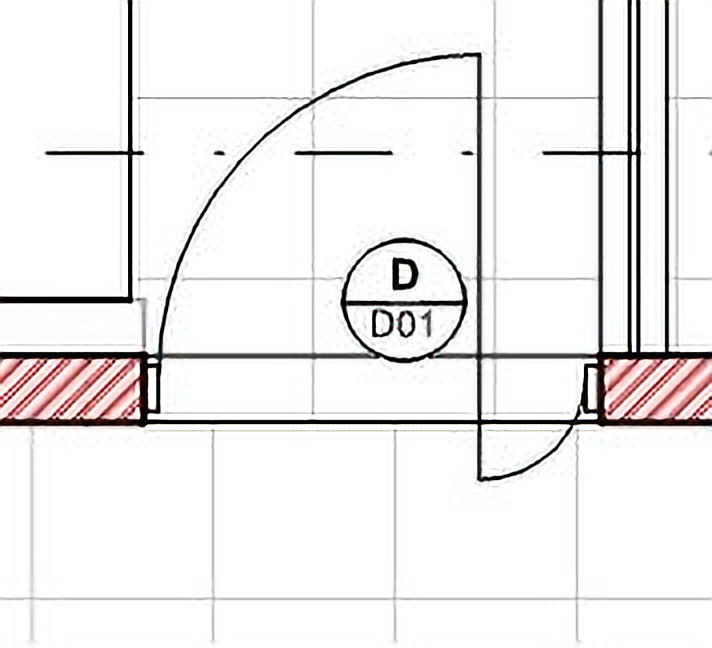
Behind every well-run project is a level of detail clients rarely see. One of these is the door schedule: a table that records the size, type, material, fire rating and hardware of every door, linked to the floor plans by a door tag.
It removes guesswork on site, makes costing accurate and ensures that what was designed is exactly what gets built. Many low-cost plan drawers skip it. We don't.

Best practice when specifying doors
Coordinate with the floor plan. Door swings must work with furniture layouts, circulation and escape routes, and must never block them.
Avoid undersized doors, especially to bathrooms, where accessibility matters most.
Think lifecycle cost. Cheap doors warp, fail at the hinges and need early replacement.
Build to the schedule. Your contractor should install exactly what the architect specified.
Conclusion
Doors are not just things you walk through. They are quiet systems holding the whole space together: safety, comfort, flow and experience.
At TectArch, we don't guess, we detail. Every door, swing and finish is considered so your project runs smoothly from the first brick to final handover. Next time drawings are placed in front of you, look beyond the big picture: notice how the doors open, where they lead and how they shape the space around them.
Planning a build or renovation?
TectArch Architects is an award-winning, PrArch-led practice based in Johannesburg. We design homes, commercial and public buildings, handle council approvals and occupancy compliance, and produce detailed drawings, schedules and BIM models so projects are built as designed.
Book a Site Assessment to get expert advice before you spend on plans.
Written by Mfanelo Hlophe, TectArch Architects.


Comments